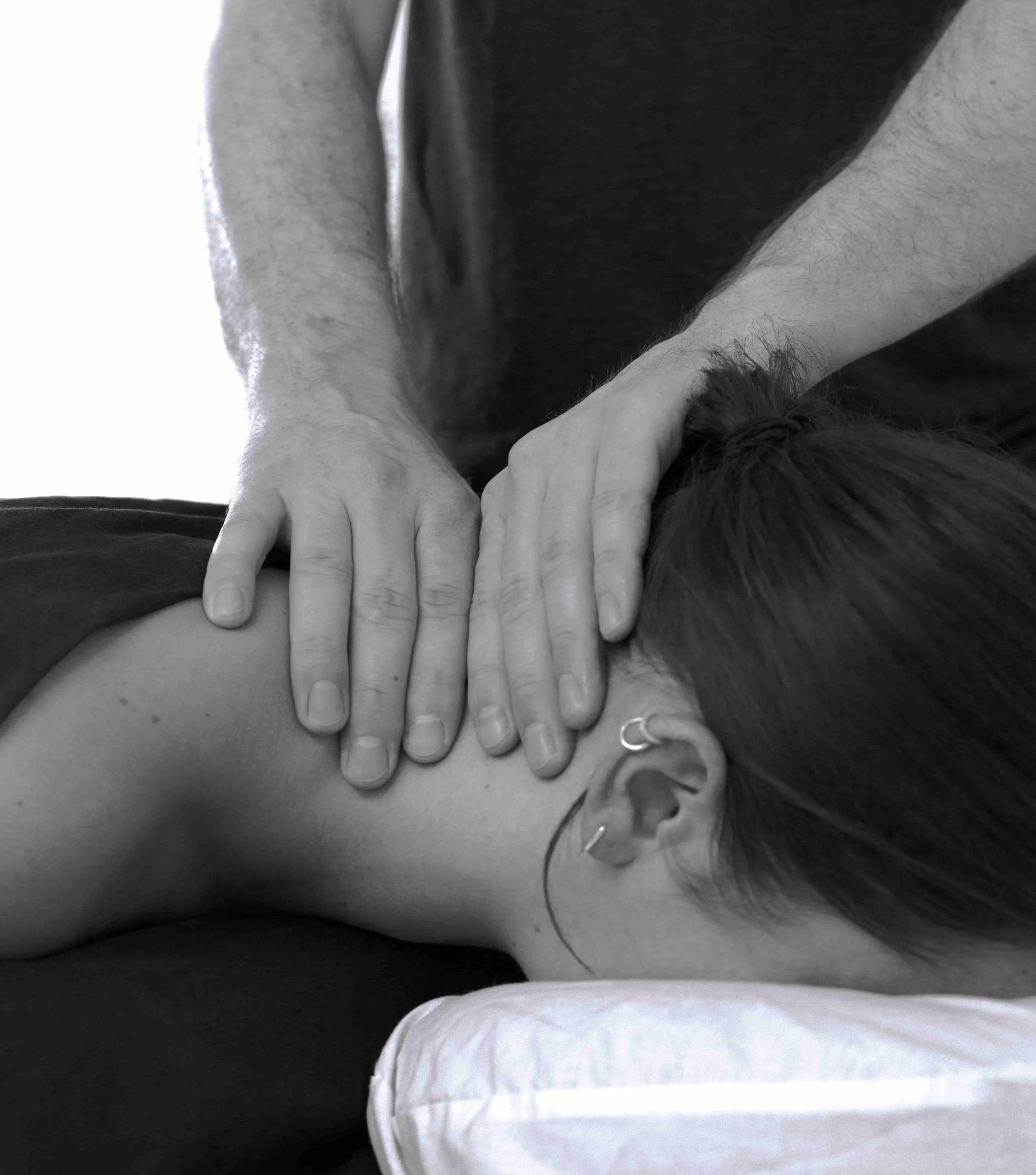
My Approach: The science of massage and your nervous system
You are the expert on being in your body
Bodywork is a collaboration, not a top-down treatment. In this space, we don’t just work on you—we work with you to navigate patterns, slow down, and create lasting ease. Whether we’re addressing deep-seated bracing patterns or simply “resetting” your nervous system, this is a shared space for you to heal and learn what your body needs to thrive.
Beyond "No Pain, No Gain"
When we think of massage, we often imagine "working out knots" or "breaking up scar tissue" through sheer force. Modern pain science tells a different story.
Real, lasting relief doesn't come from beating your body up; it comes from communicating comfort and safety to your brain. Massage does not have to hurt to be effective. When a treatment is painful, your brain perceives it as a threat and goes into protection mode—which is why traditional aggressive deep-tissue work often leaves you feeling tight again just a few days later.
Your Skin is Your Brain’s Antenna
During embryonic development, your skin and your nervous system form from the exact same layer of tissue (the ectoderm). They remain deeply intertwined for life.
When I touch your skin, I am not just manipulating muscle or fascia; I am speaking directly with your central nervous system. By utilizing specialized, intentional touch, we target specific sensory receptors to signal your brain that it is safe to let go:
Ruffini Endings: Receptors that respond to slow, steady skin stretch, triggering deep relaxation.
C-Tactile (CT) Fibers: Specialized nerves that respond exclusively to slow, gentle touch, directly downregulating stress.
Deep Comfort Receptors (Pacinian & Meissner): Receptors that register firm, supportive, and precise contact, signaling safety to the mind.
Neuromuscular Resetting: In my Integrated Bodywork Sessions, we target muscle spindles and motor nerves using advanced techniques (like PNF and MET) to physically reset persistent, underlying sensations of tightness.
Moving from Protection to Repair
By shifting your nervous system out of "Protection Mode" and into "Rest and Repair," your body undergoes a powerful shift:
The Brain Relaxes: Your brain receives a clear signal that it is safe to drop its protective guarding.
Muscles Soften: Instead of bracing against painful pressure, your muscles naturally melt because the motor nerves quiet down.
Sustainable Ease: Because we are modulating the pain signals at the source—the brain—the relief lasts significantly longer than a temporary "Band-Aid" fix.
So, What Does This Mean for Your Session?
It means we throw out the "no pain, no gain" playbook entirely. Instead of aggressive digging that forces your body to brace, my sessions move at a fundamentally slower pace, prioritizing absolute comfort and psychological safety. By incorporating deliberate, comforting long holds, we intentionally stimulate your nervous system's Ruffini receptors—the specialized sensors that respond to steady, sustained skin stretch. This unhurried, pain-free approach acts as a direct reset switch for your brain, melting away deep, locked-in patterns of chronic tension and pain from the inside out. You won't leave bruised or sore; you’ll leave feeling deeply integrated, resilient, and at home in your body.
Who This Is For
This neurologically-informed work is ideal for:
The "Deep Tissue" Tired: Those who find aggressive massage feels good in the moment, but does not have a lasting effect.
Chronic Tension & Pain: Anyone ready to break the cycle of fighting their own body.
High Stress & Burnout: NYC professionals stuck in a perpetual state of "fight-or-flight."
Sensitive Systems: Individuals navigating autoimmune flares, Long COVID, or nervous system dysregulation who need an effective, non-triggering approach.